
Federal Court Halts Enforcement of Louisiana’s Ban on People Saying “Psychological”
FOR IMMEDIATE RELEASE
Media Contact:
Sarah Harbison, General Counsel
sarah@pelicaninstitute.org
July 31, 2026
Julie Alleman and Juliet Catrett v. Harness
Louisiana Cannot Criminalize Truthful Speech by Licensed Counselors
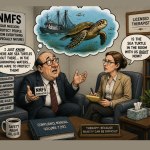
BATON ROUGE, LA — The Center for Individual Rights and Pelican Institute for Public Policy won a major First Amendment victory for their clients when a federal judge blocked the Louisiana State Board of Examiners of Psychologists from enforcing a law that made it a crime for licensed therapists to describe their own work using the words “psychology,” “psychological,” or “psychologist.”
The decision by U.S. District Court Judge John W. deGravelles of the Middle District of Louisiana granted plaintiffs’ motion for a preliminary injunction and denied the state’s motion to dismiss in full. The ruling means that licensed therapists Julie Alleman and Juliet Catrett can put the name “Psychological Wellness Institute” back on the door and can once again talk with clients truthfully about the psychological principles behind their treatment.
“Louisiana does not own the English language,” said CIR Executive Legal Officer Michael Rosman. “After spending decades earning their licenses and learning how to treat trauma, Alleman and Catrett were describing their work in ordinary, accurate terms. Today’s ruling affirms that a licensing board cannot seize an ordinary word out of the dictionary and hand it to the profession it is supposed to be regulating.”
Julie Alleman is a licensed professional counselor, a licensed marriage and family therapist, and a licensed addiction counselor. Juliet Catrett is a licensed clinical social worker. When they opened their practice in Baton Rouge in 2020, they named it the Psychological Wellness Institute. Neither has ever claimed to be a licensed psychologist.
But that was not enough for the State Board . In January 2024, the Board sent them a letter warning the Board would refer them for criminal prosecution. Under the state’s interpretation, licensed counselors, social workers, and virtually anyone else could face civil action or criminal referral for using common terms like “psychological” in a title or description of services—even when those terms truthfully described their training, services, and work with clients. Facing that threat, they renamed their practice “P. Wellness Institute” and stopped using ordinary professional vocabulary even with their own clients. They sued in October 2024.
“We picked the name ‘Psychological Wellness Institute’ because the type of wellness we aim to restore is primarily psychological,” said Juliet Catrett. “But the state made us hide the one word that told people what wellness we actually focus on. That never made sense to us, and today, a federal judge agreed it doesn’t make sense under the First Amendment either.”
Judge deGravelles rejected the State’s core defense of the law—that unlicensed counselors who say “psychological” are inherently misleading the public. The court also rejected the State’s argument that its ban reached only conduct, not speech, writing that Louisiana’s position “that counselors counsel, whereas psychologists practice psychology—is tautological.” And it overlooks the broad definition of the ‘practice of psychology,’ as well as the definitions of Plaintiffs’ respective professions.” Relying on the Supreme Court’s decision this year in Chiles v. Salazar, the court ruled that talk therapy does not stop being speech because the government calls it treatment.
“The state’s goal of protecting public health is not furthered by keeping people in need of care from finding it,” added Pelican Institute for Public Policy General Counsel Sarah Harbison. “We are thrilled that our clients can continue to serve the people of Louisiana by doing the work they were trained to do—use psychological techniques and theories to help people live better lives-without fear of criminal prosecution.”
Louisiana isn’t the only state that treats ordinary words as government property. Alabama, Arkansas, Kentucky, Mississippi, Tennessee, and Texas each limit the use of the words “psychology,” or “psychological,” in business names, advertising, or descriptions of services to licensed psychologists. Today’s ruling is an important victory against these efforts to recast speech restrictions as professional regulation. States may regulate professional conduct and prevent fraud, but they may not ban truthful, non-misleading speech merely because a licensing board dislikes who is saying it.
“This is a happy day for every professional who wants to speak truthfully about their work,” Juliet Catrett added. “We’re thankful to CIR and the Pelican Institute for standing with us and making sure we could honestly describe the care we provide.”
________
About the Center for Individual Rights: The Center for Individual Rights is a national public interest legal organization that provides free representation to clients whose rights have been violated or are seriously threatened. Founded in 1989, CIR has a record of landmark victories in the Supreme Court and many other courts, setting legal precedents that restore and protect the individual rights that are necessary for a flourishing and free society. Visit cir-usa.org to learn more.
About the Pelican Institute for Public Policy: The Pelican Institute researches and develops policy solutions to address the most significant barriers to opportunity in Louisiana. The Institute educates the public about the benefits of individual liberty and free enterprise, turning great ideas into powerful policy solutions that make a meaningful difference in people’s lives. The Pelican Center for Justice is a public interest legal center that represents clients in challenging government overreach and barriers to work and opportunity.
###